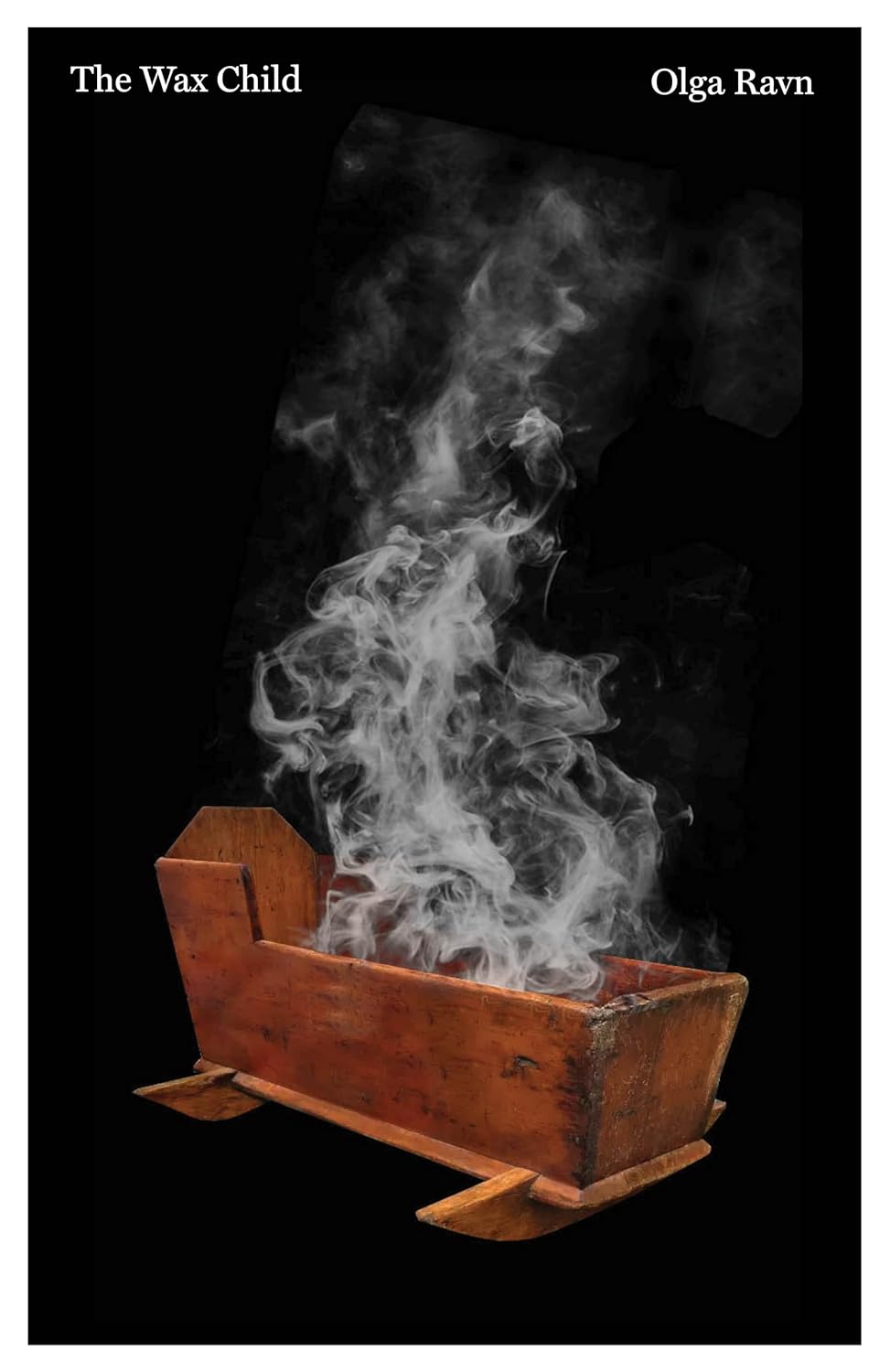
The Wax Child
Olga Ravn
This little book — it’s just 176 pages — is a mashup of historical fiction and Gothic fairy tale where the witches are real. This will not be for everybody, but if it sounds even remotely appealing to you, we wholeheartedly encourage you to give it a go.
The story, set in 1620, is based on a notorious real-life witch trial in northern Denmark. You’re probably familiar with the shape of a witch trial narrative: terrible men, unhinged stories of supernatural happenings, imagined grievances that pave the way to real betrayals, inexplicable confessions from innocent women, predetermined verdicts, and, finally, death sentences.
That’s all here, but it’s like nothing you’ve read before.
Exhibit A: It’s narrated by a poppet — a small wax doll used in folk magic to cast spells and to assist its maker. More on her later.
The story begins at a country house: Nakkebølle Manor in southern Funen, a lush green island in the center of Denmark. The manor is the home of noblewoman Christenze Kruckow. She has smarts and status; she understands herbs and women’s bodies, especially in childbirth. And she has never wished for a husband, preferring to ‘horse-ride on her own, drink red wine, and read letters well into the night.’ When others call her a witch — half serious, half in jest — she merely laughs and rolls her eyes.
Which is all well and good until it is not.
In the real world of 17th-century Denmark and in this book, King Christian IV felt compelled to honor his piety and what he considered his royal duty to enforce moral purity. In 1617, he enacted the Ordinance Concerning Witches and their Accomplices, also known as the Sorcery Decree. The law banned all forms of magic, both benevolent and malevolent — and legally obligated citizens to report suspected witches. Governors throughout the country went on the hunt. Between 1617 and 1625, an accused witch was burned every five days in Denmark.
Christenze, known for her healing powers, falls under suspicion. She’s blamed for miscarriages and mysterious deaths. Her cause isn’t helped by the loose family of women with whom she surrounds herself. When she and her friends are swept up in the net of the Sorcery Decree, she has only the poppet to speak for her.
The poppet unspools the story of the trials in sensory fragments that often drift into the realm of poetry before clambering back with a sharp detail. The poppet describes a room whose ‘smell is like the inside of a letter.’ The poppet can smell colors and hear stories told by the dirt or a candlestick. She knows what the king is doing from a single drop of ink from his quill. The king, she says, ‘smells of hidden blood.’ The poppet is both innocent as a newborn and a timeless being that sees the world turning inexorably toward modernity.
The Wax Child was longlisted for the 2026 International Booker Prize. In an interview, author Olga Ravn said that as a child, she was convinced she was a witch. She taught herself to read and write runes; she made an altar. Then as an adult, she studied the witch trials. She created visual art and radio; she even wrote a play about witches. But she was reluctant to write a historical novel. Then in her research, she learned about a poppet and realized that was her entry to telling the story.
And what a story! She weaves Nordic folklore, 17th-century letters, court transcripts, and other tidbits she found in archives into the plot. From time to time, the narrative is gently interrupted by spells from the grimoires housed at the Royal Danish Library in Copenhagen.
Exhibit B: ‘Take the water from the eye of a stallion that has not yet been led to a mare,and with it wet your own eyes, then all can be seen that would otherwise be unseeable.’
This novel is enchanting — and, tragically, still relevant here in the 21st century, 400+ years since the witch trial that brought Christenze Kruckow’s life to its unwarranted end.
The year passed, and the years passed. And I was a wax child. I did not age. I lay in the ground and saw it all. Insects and worms approached, to retreat on sensing my poison. I saw the rising of realms, the founding of states, the centralizations of power. I saw the clouds hasten by. I saw the great black tongues of oil advance as the fern from the soil puts out its feelers. I saw hands be raised and clench into fists. I saw knives gleam, children play. I saw steam locomotives, the smallest particle split and exploded. I lay in the ground. And from there, at certain times of the month, I could observe the brilliant moon. TE
— Olga Ravn