Every Friday, we celebrate the weekend — and all the reading and relaxing and daydreaming time ahead — with Melissa's favorite book- and travel-related links of the week. Why work when you can read fun stuff?!
This post is part of our Endnotes series.
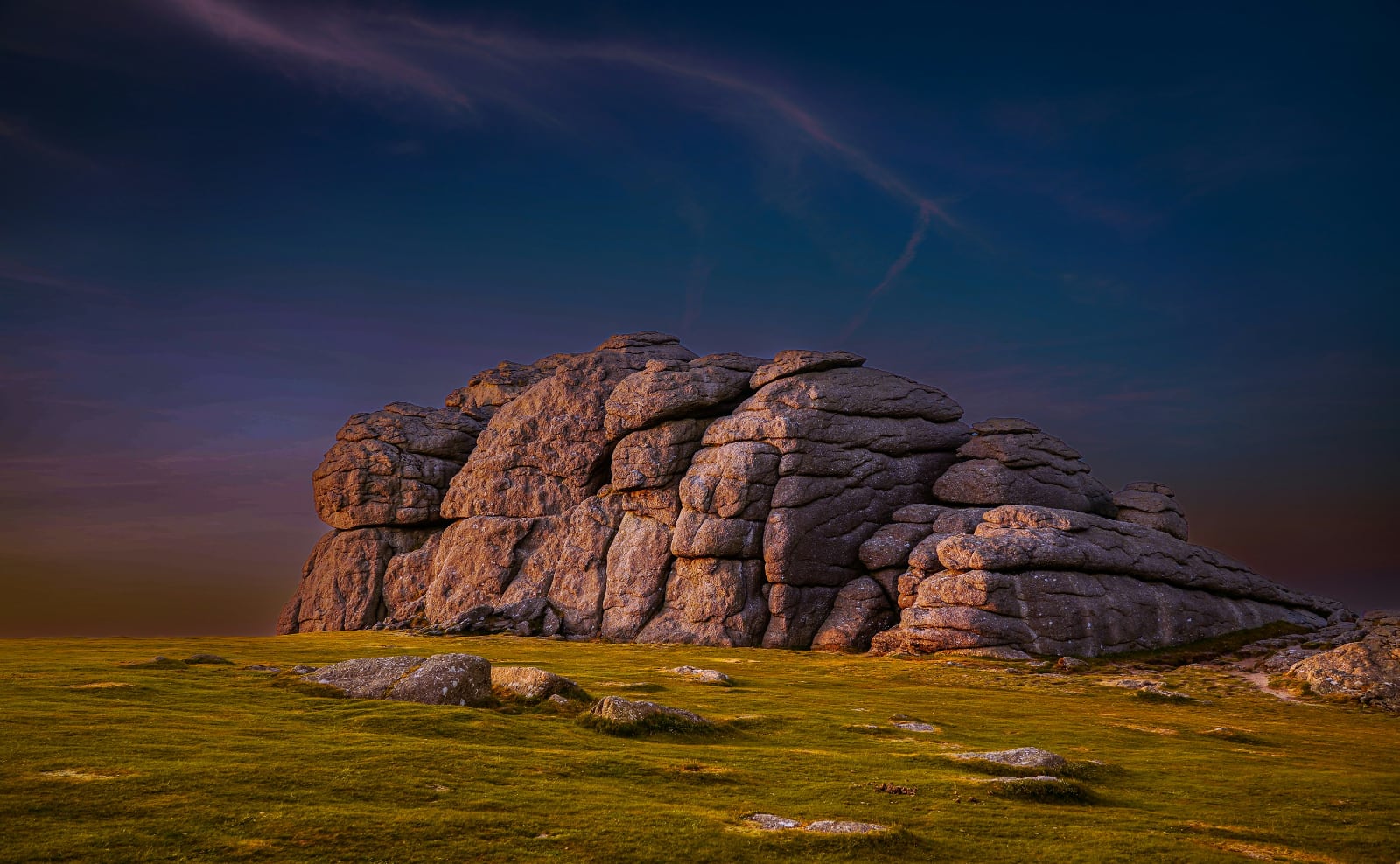
That rocky outcropping above is called a tor. And this pile, specifically, is Haytor Rocks in Dartmoor National Park in Devon, in South West England. The imposing mass of granite was formed more than 280 million years ago, and people have been wandering the moors there for about 4000 years. In June 1901, one of those people was Sir Arthur Conan Doyle (whose birthday, BTW, is today — born 1859). Doyle traveled to Devon with his friend and journalist Bertram Fletcher Robinson to explore locations and research local folklore — for his most famous Sherlock Holmes novel, The Hound of the Baskervilles. The Gothic mystery story takes Holmes and Dr. Watson to Dartmoor to investigate a seemingly supernatural hound that’s haunting Devonshire. (Read it free online at Gutenberg.) The BBC has the scoop on the places, people, and legends that inspired the tale. If you’re interested in the history and folklore of Dartmoor, the Moor than meets the eye YouTube channel has a collection of entertaining re-enactment videos. As you might expect, Dartmoor is a fantastic place to hike, cycle, canoe, camp, climb, and geocache. Dartmoor Magazine offers a step-by-step guide to take a stroll around Haytor Rocks — and here’s a first-person account of chasing Sherlock Holmes across Dartmoor. If you’d like to visit, here are tips to get you started.
News you can use! Tickets for the British Library exhibit ‘Agatha Christie: A World of Mystery’ are now available. It runs from 30 October 2026 through 20 June 2027. Many of the objects are on display for the first time ever, including letters, notebooks, photos, early manuscript drafts, and other treasures. See the typewriter (1937 Remington) where she wrote And Then There Were None! Read her notes for the theater adaptation of Witness for the Prosecution! Peek at her letters to family, including a recap of her journey on the Orient Express! More details here.
According to Hyperallergic, the painted book cover is back. ‘Walk into any bookstore in the United States lately, and the shelves and new-release tables resemble group exhibitions. Reproductions of oil and acrylic paintings, many immediately recognizable, fill the covers. Their colors are saturated, often primary. Figures abound, with inscrutable expressions and intimate gestures emphasized by tight cropping. Rather than stock photos or digital renderings, the covers foreground material marks made by artists… In a market flooded with design templates and AI-generated imagery, the painted cover stands out as distinctly human.’
Bolster your TBR with 12 art books to kick off summer (novels and nonfiction) and the best historical fiction of 2026, from the Walter Scott Prize for Historical Fiction.
More TBR (and fuel for a robust debate): The Guardian’s interactive list of the 100 best novels of all time. The list is interesting, but I’m more taken with all the detail included in the piece. You can see the top 10s of all the literary luminaries who contributed to the final list.
‘Come to me, those whose stomachs ache, and I will restore you.’ Thus sayeth the facade of the first restaurant, opened in Paris on the Rude des Poulies (now the Rue du Louvre) in 1765. Here’s the whole story.
This 19th-century print by Albert Robida — ‘Leaving the Opera in the Year 2000’ — is so charming. Read more about it here.
Neat! You can tour The Museum of Innocence in Istanbul online. It’s a ‘unique, deeply atmospheric cultural space created by Nobel Prize-winning author Orhan Pamuk… the physical realization of his eponymous 2008 novel, displaying thousands of everyday objects that represent the lives, memories, and obsessions of the book’s characters.’
From the LA Times: My Bucket-List Trip to Yorkshire Led Me to James Herriot, Dracula and the Brontës. The first sentence is like the start of an adventure novel, ‘I have always longed to go to Yorkshire.’
Excuse me, where do I sign up for the reading cabins?
I obviously clicked on this headline as quickly as humanly possible: Bats as Librarians, Books as Bone: Gothic Fiction and the Library as Crypt. Yes, please, I would like all the details on Gothic libraries and bats.
Oooh… a conversation with Tana French (‘First Lady of Irish Crime’) is part of this year’s Bloody Scotland, a writers/readers festival in Stirling, Scotland, in September. Ticket info — Bloody Scotland info.
Top image courtesy of Nick Fewings/Unsplash.
Want to keep up with our book-related adventures? Sign up for our newsletter!
Can you help us? If you like this article, share it your friends!
Strong Sense of Place is a website and podcast dedicated to literary travel and books we love. Reading good books increases empathy. Empathy is good for all of us and the amazing world we inhabit.
Strong Sense of Place is a listener-supported podcast. If you like the work we do, you can help make it happen by joining our Patreon! That'll unlock bonus content for you, too — including Mel's secret book reviews and Dave's behind-the-scenes notes for the latest Two Truths and a Lie.
Join our Substack to get our FREE newsletter with podcast updates and behind-the-scenes info — and join in fun chats about books and travel with other lovely readers.
We'll share enough detail to help you decide if a book is for you, but we'll never ruin plot twists or give away the ending.
Content on this site is ©2026 by Smudge Publishing, unless otherwise noted. Peace be with you, person who reads the small type.