This is a transcription of Wales: Castle Ruins, Moody Skies, and Stories by the Fire
David: Hello. Welcome to Strong Sense of Place.
Melissa: In each episode, we focus on one destination and discuss what makes it different than any other place on Earth.
David: Then we recommend five books we love that took us there on the page.
Melissa: I’m Melissa Joulwan.
David: I’m David Humphreys.
David: We’re going around the world one great read at a time. Thanks for joining us.
[cheerful music]
David: Welcome to Strong Sense of Place. Today we get curious about Wales. Stay tuned for Two Truths and a Lie, where Wales offers us: a race that shouldn’t exist, a treasure you’re not allowed to dig up, and a festive horse skull that just wants to come inside for a drink. How are you supposed to say no to that? Then we’ll talk about five books we love.
Melissa: I’m recommending a modern retelling of Dracula that’s rich with Welsh folklore and a found family of badass women.
David: I’ve got the true story of a little girl whose childhood home was a Welsh recording studio, where Freddie Mercury was just ‘the man on the piano’ and rock stars kept wandering through the kitchen. But first, Mel’s going to bring us up to speed with the Wales 101.
Melissa: We spent most of the month of October in Wales. Last January, we announced our Readers’ Weekend at Trevor Hall, an estate in Wales. It was an in-person getaway — a mashup of country house weekend and the best book club ever. It was a fantastic experience, and we’ve recorded a mini episode of our show to tell you what that was like. It will be out next week.
Melissa: Today, we’re going to explain why Wales is such a magical place, share some of the places you might want to visit, and recommend books with a very strong sense of Wales.
Melissa: First, let’s get oriented. Wales is in the UK, snuggled up to England on its eastern border and the Irish Sea on the west. The capital is Cardiff in the lower corner, almost on a straight line west from London.
Melissa: Wales is about the size of the US state of New Jersey but with 1/3 the population… of people. Wales has about 3 million human inhabitants, and around 10 million sheep.
Melissa: No word on if the sheep speak English or Welsh, but both are official languages of Wales. Since the 1990s, Welsh has been required in school up to the age of 16 and about 28% of the population speaks Welsh.
Melissa: I gotta say, we worked on our Welsh pronunciation, and it is tough. The Welsh alphabet has 29 letters — there are double letters that we just don’t have. Double d sounds like th in this… ch sounds like [make the sound] in loch. They roll their Rs quite a bit. Ll sounds like [make the sound]. We got pretty good at saying the name of the town Llangollen because we stayed there for three weeks.
Melissa: And now, a whiplash tour of Welsh history.
Melissa: The area we know as Wales has been inhabited since about 250,000 BCE. It’s been home to Celtic tribes… was invaded by the Romans, Saxons, Norman, and Vikings… went through centuries of skirmishes among the independent Welsh kingdoms and with England… and then officially became part of England under Henry VIII in 1536. Through all of that, Wales has kept its unique culture alive, symbolized by the Red Dragon on its flag and the Welsh language Cymraeg.
Melissa: That sense of Welsh pride is also embodied in its name. The English name Wales comes from an Anglo-Saxon word meaning ‘foreigners’ or ‘outsiders.’ It’s the label the Anglo-Saxons gave to the local Celtic people when they arrived in the 5th century.
Melissa: But The Welsh name for Wales is Cymru. From an old Celtic word meaning ‘compatriots’ or ‘fellow-countrymen,’ it’s the name they gave themselves.
Melissa: Fun fact: Wales is known as the land of castles. It has 600 of them. That’s more castles per square mile than any other country in Europe. That’s all down to its 400-year run of infighting and skirmishes with England. Stone castles were built on hilltops, at the mouths of rivers, and along the rocky coastline to keep invaders out and the Welsh in. If you’re charmed by stone towers and imposing crenellated walls perched atop cliffs overlooking the sea or hills dotted with sheep, Wales is the place for you.
Melissa: Wales is also the place for you if you want to ramble around outside under moody skies. There are craggy mountains, beaches with stony crags and sand beaches, moorlands and forests, all criss-crossed with hiking paths. Wales is also the place for you if you want to be cozy while drinking tea or whisky, feeding your mind with literary pursuits like historical libraries, folklore, and poetry.
Melissa: Today, I’m mostly focusing on the literary hijinks, but next week, in our mini-pod, we’ll share more about what we specifically saw, ate, and climbed in Wales.
Melissa: You can’t really talk about Wales without getting into the folklore — and the borderland between Wales and England is a good place to start. That threshold has a glimmer of magic and mayhem about it — where Welsh, Celtic, and Norman myth grew into fantastical stories. The landscape and weather can be quite ethereal, shrouded in mist, with mountain tops and the ruins of castles and abbeys emerging through the fog. The old tales passed down through oral storytelling centered the landscape of lakes, rivers, and mountains… ancient places inhabited by giants and fairies and beautiful, bewitching maidens.
Melissa: All of that is woven into the books we’re going to talk about later. It was nearly impossible to find novels that didn’t at least wink at Welsh folklore. Even what looked like straight-up police procedurals flirted with ancient beliefs and superstitions.
Melissa: A shocking number of beloved books were inspired by and written in Wales. In Cardiff, you can meander the streets that inspired Roald Dahl’s classics like ‘Charlie and the Chocolate Factory’ and the ‘Great Mouse Plot.’
Melissa: JRR Tolkein was not Welsh, but he loved Wales. He was so affected by the Welsh mountain range Brecon Beacons, they influenced his creation of Middle-earth in The Lord of the Rings books. The Shire, home to the Hobbits, was inspired by the houses in the Welsh village of Crickhowell, and his Elvish languages were based on the syntax and rhythme of Welsh.
Melissa: In North Wales, there’s a Regency country house called Plas Tan yr Allt surrounded by lush gardens. It was once home to poet Percy Bysshe Shelley. While Shelley lived there, he wrote his epic poem Queen Mab, in which a fairy queen takes the spirit of a sleeping woman on a journey through space and time. It’s also where he survived an assassination attempt?! Legend has it that one night — perhaps one dark and stormy night? — in 1812, a man fired a pistol through the window of Plas Tan yr Allt, leaving a hole in Shelley’s curtains and clothes, but not Shelley himself. Some people think it was the poet’s delusion. Others believe him. And some people think the experience inspired a scene in his wife Mary Shelley’s book Frankenstein. The house is now a bed-and-breakfast. I can only assume guests are safe from late-night marauders.
Melissa: And finally, we can’t talk about Welsh literature without mentioning the great poet Dylan Thomas. He’s probably best known for the poem ‘Do not go gentle into that good night’ and the story ‘A Child’s Christmas in Wales.’ He was born the south-west coastal town of Swansea and spent his childhood roaming about the countryside villages nearby. His home is now a museum where you can stay overnight. The house has retro Edwardian décor — and no TV. Your booking includes a house tour and you can schedule an afternoon tea or Edwardian dinner. As you might expect, during the holidays, they host a Child’s Christmas in Wales party in the room that inspired the story.
Melissa: If you have never listened to Welsh actor Michael Sheen recent Dylan Thomas’ words, please go to the the links I put in show notes and remedy that immediately. There has never been a better marriage of writer and narrator.
Melissa: In other book-related attractions: Wales is home to the original book town — Hay-on-Wye and the Hay Literary Festival. Hay-on-Wye straddles the border in Mid-Wales. It’s got a hilltop castle, cobbled streets, charmgin cafes, curios shops, and about 30 bookstores. Used books, new books, genre-specific shops. Literally a book town. And every spring since 1988, the town has hosted the Hay Festival of Literature — 11 days of book events with international authors, live music, comedy and films.
Melissa: OK. You know how sometimes when we’re in a beautiful museum or library, we joke about hiding from teh security guards so we get locked in overnight? What if I told you there’s a historica 19th-century library in Wales where you can legally sleep among the books? It’s Gladstone’s Library in Hawarden on the Wales-England border, close to the River Dee.
Melissa: Gladstone’s is the UK’s only residential library. It has 26 guest rooms within stumbling distance of the stacks and reading room. And it’s not too spendy — just a little more than $200 for a double room.
Melissa: The outside of the library is an imposing Victorian Gothic Revival, all red sandstone, arched windows, steep sloping roofs - if you saw it without knowing, you would guess either orphanage or library. Inside, the dark wood bookshelves and arched ceilings are lit by golden light streaming in through tall windows.
Melissa: The library was started by William Gladstone when he was 85 years old. He decided that he had collected too many books. His daughter Mary said, ‘He wished to bring together books who had no readers with readers who had no books.’ In 1895, he spent £40,000 of his own money on founding and building the library, then he himself carried 32,000 books from his home 3/4-mile away to the new location IN A WHEELBARROW, with only his valet and his daughter Mary to help.
Melissa: he library has four writers-in-residence every year — big names like Naomi Alderman and Sarah Perry have written there. More than 300 books have been started, revised, or finished by writers at Gladstone’s over the past decade. But you don’t have to be a writer to stay there — it’s open to people who just want to enjoy their books and soak up the quiet library vibes. Also, I love this detail from one of the reviews I read: ‘It is assumed that you will wish to be up, breakfasted and at your desk in the library by 9 a.m. sharp, or woe betide you.’
Melissa: We have a lot more to say about our time in Wales. So look for our mini-episode next week. We’ll share stories about our time at Trevor Hall, our float along the Llangollen Canal, hiking in Snowdonia, and our time at the seaside.
Melissa: Until then… The fantastic caterer who took care of us at Trevor Hall taught us how to say cheers in Welsh. So let’s all raise an imaginary glass and say… To your health… lechyd da! That’s the Wales 101.
David: I’m about to say three statements. Two are true. Mel doesn’t know which is the lie. Statement one: In one Welsh town, there’s a ‘Man vs. Dragon’ race where people run a course through the streets while a big mechanical dragon on wheels tries to follow the same route. Statement two: Deep under an ordinary rubbish pile in Wales, there’s a lost fortune so large it would make a pirate blush, and no one is allowed to dig it up. And statement three: There’s a Christmas custom in Wales that mixes gothic creepiness with hip-hop energy: mysterious visitors demand to be let in to your home, and you have to battle them in verse on your doorstep.
David: Let’s take them one at a time. Statement one: In one Welsh town, there’s a ‘Man vs. Dragon’ race where people run a course through the streets while a big mechanical dragon on wheels tries to follow the same route.
David: How I wish this were true. How is this not true?
David: Picture it: a big red mechanical dragon rolling down the middle of a Welsh town, wings flapping, fire spitting out of its mouth, chasing a pack of screaming, laughing runners up the high street. You can see that, right? Of course Wales would do that. But, no. I made that up. I invented the dragon because I wanted an excuse to talk about another very questionable annual endurance race that actually exists.
David: In a little town called Llanwrtyd Wells, almost every year for the last forty-odd years, they race people against horses. 
David: The story goes that one night in the local pub, the Neuadd Arms, two men were arguing about whether, over a long enough cross-country route, a human could keep up with a horse. The pub owner was listening, thought, “Well, I’d like to see that,” and decided to turn the argument into an event. 
David: So now there’s a course of about 21 miles — 34 kilometres — over a mix of road, trails, and proper Welsh hills. The first year, a horse won. In fact, a horse wins almost every year.
David: It took twenty-five years before a runner finally beat the horses, in 2004. And it’s only happened a handful of times since. 
David: Most recently — in June of this year — a world-class long-distance runner named Dewi Griffiths — who is Welsh, which feels important here — not only beat about 650 other runners and 60 horses, he finished almost twelve minutes ahead of the first horse. That is not nipping its heels; that is destroying the field. He’s only the fifth human ever to do it, and the first Welshman to bring the title home.
David: If that sounds like your kind of terrible idea in the best possible way, entries for the 2026 Man v Horse race open on 10 January at 10 a.m. Greenwich Mean Time. You, too, can pay money for the privilege of being definitively beaten by a horse in the Welsh hills.
David: I should say: Llanwrtyd Wells is not alone in this madness. There are other people-versus-horse races out there — there’s one in Scotland, up near Loch Ness, there’s one in New Zealand, and there’s one in Prescott, Arizona — which also started with a bar bet.
David: Statement two: Deep under an ordinary rubbish pile in Wales, there’s a lost fortune so large it would make a pirate blush, and no one is allowed to dig it up.
David: I wish this story had gobs of priceless jewels and a lost ancient library at its heart, but it does not. This is a bitcoin story. There are really just two things you need to know about Bitcoin for this story.
David: First: In the early days, you could get it with an ordinary laptop. You ran a little program, your computer did number-crunching in the background, and now and then it spat out some of this strange new internet money.
David: Second: The ‘coins’ don’t live in a bank account. They live in a kind of digital safe that only opens with a secret code called a private key. That key is usually stored in a file on a hard drive. If you lose that file, there’s no “forgot my password” button. The money still exists, but as far as you’re concerned, it’s gone forever. 
David: Now to Newport, in south Wales, not far from Cardiff, and a computer engineer named James Howells. Back in 2009, when Bitcoin was new and basically worthless, he mined about eight thousand coins on his home computer and stored the key on a laptop hard drive. Then life moved on. The laptop broke. The drive went into a desk drawer. Years passed. 
David: In the summer of 2013, he was clearing out his office. He had two old hard drives. One was empty, one held that Bitcoin key. He meant to throw away the blank one. In a moment that he’s replayed in his head ever since, he mixed them up. The drive with the fortune on it went into a bin bag and off to the local dump — the landfill on the edge of town. Weeks later, he realised what he’d done. By then, the bag was buried under thousands of tons of rubbish. 
David: At first, the loss was painful, but it wasn’t yet ‘move to Paris and become a mysterious benefactor’ money. In early 2013, one Bitcoin was worth about 13 dollars, which put that hard drive in the ballpark of a hundred thousand dollars — brutal to lose, but still just about imaginable. Then the price of Bitcoin went on its rocket ride. By the end of 2013, it was trading over a thousand dollars a coin, so that same forgotten drive was suddenly worth around eight million dollars. Fast-forward to today: as we’re recording this, one Bitcoin is worth north of ninety-four thousand U.S. dollars, which gives that buried hard drive a theoretical value of roughly seven hundred million dollars.
David: Howells has spent years trying to get it back. He’s put together a team of landfill experts and data-recovery specialists. He’s found investors willing to fund a huge, carefully managed dig using robots and AI to pick hard drives off a conveyor belt. He’s offered a big share of any recovered fortune to the city council and even to every resident of Newport. But the council has always said no: too expensive, too risky for the environment, too little chance of success. When he finally took them to court, a High Court judge threw out his claim in early 2025, saying the plan had ‘no realistic prospect’ of working. 
David: So today, the story sits in a very modern kind of limbo. Somewhere under a Welsh landfill, there may be a digital treasure chest worth a life-changing amount of money — and unless something dramatic changes, it will stay there, out of reach, because of one wrong hard drive in one black bin bag on one ordinary day twelve years ago.
David: Statement three: There’s a Christmas custom in Wales that mixes gothic creepiness with hip-hop energy: mysterious visitors demand to be let in to your home, and you have to battle them in verse on your doorstep.
David: This is the tradition of the Mari Lwyd [ Merry Loo-wid - like fluid ], which roughly translates to ‘Grey Mare.’ Imagine it: It’s a dark winter evening between Christmas and New Year. You’re at home, warm, maybe halfway through a tin of cookies… and there’s a knock at the door. When you open it, you don’t see carolers. You see a horse’s skull on a pole, draped in a white sheet, decorated with ribbons that maybe look like hair — and sometimes fairy lights, with a human body hidden underneath. The jaw can be rigged to snap open and shut. Glass eyes may gleam in the sockets. This unsettling creature is the Mari Lwyd. 
David: She doesn’t travel alone. The Mari is led by a handler and followed by a small group of people: singers, musicians, maybe a joker or two in costume. They’ve come wassailing, that old tradition of going door to door in the midwinter, asking for food and drink in exchange for song and good wishes. But in this Welsh version, it’s not just We Wish You a Merry Christmas and a mince pie. It’s a verbal duel. 
David: Outside the house, the Mari Lwyd party sings a special set of verses, asking to be let in. Inside, the householders answer back with verses of their own, refusing them entry. Back and forth it goes, in Welsh, often partly improvised, each side trying to be wittier, sharper, more inventive. This call-and-response is called pwnco, and it can go on for quite a while – like a folk version of a rap battle, but with more tea.

David: Eventually, tradition says the Mari should win. The household gives in, and the horse and her entourage tumble into the kitchen or living room. There’s singing, maybe some mischievous snapping of that bony jaw, maybe we chase the children around — and, crucially, refreshments: beer, snacks, whatever the hosts have to hand. In return, the Mari Lwyd is said to bring good luck for the coming year – which is not a bad trade for sharing your biscuits with a skeletal party guest and his friends.
David: The origins of the custom are murky. Some say it’s ancient and possibly pre-Christian; others think it’s ‘only’ a couple of centuries old, part of a wider British fondness for hobby horses and hooded animal costumes. What is clear is that it almost vanished in the 20th century and then came roaring — or rattling — back. These days, you’ll find modern Mari Lwyd processions in towns and villages across South Wales, and she’s become a kind of spooky, beloved mascot of Welsh winter: part folk horror, part community theatre, and all unforgettable. 
David: If you’re curious about the Mari Lwyd beyond the real-world folklore, you can also meet her on the page. She turns up in Susan Cooper’s novel Silver on the Tree, the final book in her Dark Is Rising sequence. There, she’s transformed into an undead white unicorn, rising from the sunken lands off the Welsh coast to guard a magic sword — the same eerie, bony energy, just cranked up a bit. Susan Cooper also wrote the winter solstice poem ‘The Shortest Day,’ which we’ve read to you before on this channel, and very likely will again.
David: So there we have it: a skeletal horse rapping at your door, a fortune buried in a landfill, and a town where people still race horses up and down the hills. All just a small part of the magic of Wales. That is Two Truths and a Lie.
Melissa: My first recommendation is ‘Twenty Thousand Saints’ by Fflur Dafydd. This is a mostly quiet story set on the real-life Bardsey Island, which is a pretty amazing place.
Melissa: Bardsey is a small island off the coast of North Wales in the Irish Sea. At its widest point, it’s only half a mile. You can walk the perimeter trail around the entire thing in about 2 hours.
Melissa: It’s a wind-lashed, sea-splashed, travel back in time kind of place. There’s no wi-fi, the homes don’t have electricity, and the only way on or off the island is a ferry that can’t get there in inclement weather.
Melissa: The current year-round population is three. Three people! But there are 200 sheep and 25 Welsh Black cattle. The island is also home to 30,000 breeding pairs of a seabird called the Manx shearwater. It’s scientific name is Puffinus puffinus! And a colony of 200 Atlantic gray seals bob in the waters off the rocky bays around the island. In September and October you can see their fuzzy pups on the beach!
Melissa: The island is also open to human visitors — there are 10 holiday cottages and a bird observatory — but tourists can stay only between March and October. After that, the weather is too rough for normies.
Melissa: For millenia, the island has been visited by fisherman, farmers, pirates, and religious pilgrims. By the 12th century, it was known as the ‘Rome of Wales.’ The pious believed that if a person made three pilgrimages to Bardsey, that was as holy as one trip to Rome. Bardsey also became known as the ‘Island of 20,000 Saints,’ based on the myth that innumerable saints were buried there. I will put tons of links in the show notes, in case you’d like to visit Bardsey Island.
Melissa: So, this book. There’s a small set of somewhat quirky characters — strangers to each other, brought together in this unusual, isolated place. Many of them are keeping secrets about their lives off the island — and there are hidden connections from the past among some of the others.
Melissa: The cast of characters is small and well drawn. There’s an ambitious documentary film maker and her assistant… a very flirty ecologist who causes all manner of hormonal turmoil… the writer in residence, a troubled poet, with writers block… an archaeologist with murky motives, and a somewhat reluctant nun who wasn’t always so spiritually oriented. And then surprise! A previous island resident arrives to further upset the equilibrium.
Melissa: At one point, the weather turns so foul, the ferry can’t come for days, trapping them all together without supplies. And yes, one beloved islander did go missing under mysterious circumstances a decade ago.
Melissa: So by now you might be thinking this is a mystery novel with a closed circle of suspects. But this is not the story of amateur sleuths following clues. It’s a deeper story about people trying to feret out the truth so they can reckon with past trauma. Make sense of their lives. Move forward with a sense of acceptance, if not peace.
Melissa: In a different kind of book, that could be really heavy. But this is not. It’s got adventure, a hint of menace, and more than a little dark humor.
Melissa: One of my favorite bits involves Viv. She’s a nun and also a hermit. Part of a loose community of nuns who each live alone on different islands. They periodically visit each other at their various island homes, and this year, it’s Viv’s turn to host the hermit convention. That means three other sisters will join her on Bardsey to pray, walk in nature, and take meals together… all in silence. Viv HATES their intrusion and her internal snarky comments are very funny. Here’s a little snippet from one of their silent morning walks:
She’d been urged, through a series of hand gestures, to lead the way. Her dog, who’d been out roaming all morning, now came wagging about her heels, tripping her up, asking for breakfast. Sister Mary Catherine had been offended by the barking, pointing at the dog, glaring at Viv as though she’d somehow commanded him to do so. Viv had stopped the procession, and taken him back to the house… thrusting a handful of dog biscuits at him. When she turned round she was face to purple-face with Sister Lucy, who had been waiting for the slip-up. Even when she rejoined the procession it was indicated, through a myriad of confusing hand signals, that she was still somehow breaking the silence with the flapping of her habit in the breeze. It seemed that Sister Lucy’s sneezing and less-than-silent wind-breaking were allowed by means of some devout loophole in the fine-print of Godly silence.
Melissa: The author Fflur Dafydd writes in both Welsh and English. She’s written six novels and won a slew of awards. In 2002, she was the Writer in Residence on Bardsey for six weeks, and that’s how this book came to be.
Melissa: It’s obvious from her prose that she loved the island. The descriptions of the scenery and weather are gorgeous. She also unpacks challenging events in Welsh political history. Her story includes tender romance and straight-up lust — flashes of community that are touching and uplifting. It’s funny and sad, claustrophobic and expansive. There’s a veracity to the characters, especially in the way small, seemingly inconsequential interactions have outsized impact in the context of this brutal, magical place that feels like it’s made only of crashing surf and vast sky. It’s ‘Twenty Thousand Saints’ by Fflur Dafydd.
David: My first book is ‘Rubbernecker’ by Belinda Bauer. This is one of those books where the pages just got rattling past. I opened it and before I knew it, I was 60 pages in.
David: This is a crime novel, so you know a body is coming. What I loved is how long Bauer makes you wait for it, and how propulsive that wait feels.
David: We meet two characters in the very first chapter. The first is a man who is in a horrific car accident. His name is Sam — we don’t learn that for a while. He’s driving over the River Taff in Cardiff. If you’re local, you can probably picture the spot. He’s got the radio on. “The Pina Colada Song” comes up — if you like pina coladas, getting caught in the rain — and, as any right-thinking person would, he reaches down to change the station. The car hits ice, skids, smacks the wall, jumps the barrier, and drops two hundred feet into the river.
David: That should be the end of him. But you realize it isn’t, because of how it’s written. Those sections are in first person, past tense. And kind of cheeky somehow. You think: okay, this man is alive, somehow — but you have no idea how bad it’s going to get.
David: We leave him there and jump to our second main character: Patrick. Patrick is eighteen, a university student, and eventually we learn he’s on the autism spectrum. He has Asperger’s. He’s hyper-logical, very literal, and permanently baffled by the social shortcuts the rest of us take for granted. He’s the kid who lines up blue gloves in perfect rows, eats food in alphabetical order, and gets into trouble because he answers questions honestly instead of politely.
David: Patrick sees the aftermath of that car crash — not the crash itself, and not Sam. He’s driving over the bridge with his mum, spots the commotion, and bolts out of the car to stare while she yells after him. For at least half the book, you have no idea what these two have in common or how their stories will meet.
David: Time’s a little loose in Rubbernecker, but in a way I found compelling. Bauer gives you short, vivid scenes, and she shifts the camera. The Sam chapters are in first person. By chapter four, he’s in a coma ward, describing what it’s like to be trapped in his own body, hearing and thinking but unable to respond. The Patrick chapters — and everyone else — are in third person.
David: Then things move to the dissecting room. Patrick signs up for an anatomy course and finds himself in a university lab, taking apart a human body with a group of squeamish undergrads. They’re assigned a cadaver they know only as Number 19. While everyone else is fighting not to faint, Patrick is … noticing things. The official cause of death doesn’t line up with what he sees inside the body. The anatomy is wrong. Something in the body is quietly insisting: this man did not die the way they say he did. And because Patrick cannot let go of a puzzle once he’s seen it, he decides he’s going to solve this one – even though nobody else believes a crime has taken place. 
David: As a reader, I spent a long time wondering: is Number 19 Sam? How do his first-person coma chapters connect to this anonymous body on the slab? And because Bauer’s playing games with time, I wasn’t completely sure what happened when.
David: Eventually we pick up a third thread: a weary Welsh detective. And slowly, those three strands — the dissecting room, the coma ward, the police investigation — begin to braid together. You come for the mystery; you stay because you care about these people.
David: Patrick is the heart of the book. Bauer doesn’t use his diagnosis as a cute quirk; it’s the lens of the whole story. His autism is the reason he spots what other people miss in the lab — and the reason they dismiss him. His obsession with why is both his superpower and the thing that keeps tripping him up.

David: Reviewers, including autistic readers, have praised how she handles this: the hyperfocus, the social misfires, the sensory overload, without turning Patrick into a joke or a saint. Reading it, I kept wanting to reach through the page and give him a little rest from the world — from clueless classmates, patronising doctors, and his exhausted mum, who clearly loves him and is also utterly worn out by him. Bauer lets you feel both sides of that relationship, and it’s rough.
David: Belinda Bauer knows Cardiff. She studied journalism there, and worked there as a court reporter. You can feel it in the book. The city comes through in the small details: the scale, the way rugby seeps into eveningns, the texture of the hospital corridors and the university life.
David: I also want to mention that this book won the Theakston’s Old Peculier Crime Novel of the Year Award. That’s notable for two reasons: first, it’s just a great name. Second, that’s a book award sponsored by a British brewery. The winner receives £3000 and a small hand-carved oak beer cask.
David: For me, Rubbernecker hits that sweet spot between “page-turning crime novel” and “quietly humane character study.” It’s twisty without being showy; funny in that dark hospital way; and it made me think about bodies and brains and what we owe people who can’t speak for themselves.
David: If you like crime novels where the main character is not a standard-issue detective, or you enjoy mysteries with medical and ethical complications, or you’re looking for a nuanced, compassionate portrayal of a neurodivergent character, this one is well worth your time. It’s ‘Rubbernecker’ by Belinda Bauer.
Melissa: My next recommendation is ‘Welsh Food Stories’ by Carwyn Graves. This is nonfiction book that combines memoir, travelogue, food history, and snippets of literature to celebrate traditional Welsh ingredients. I found it utterly fascinating and inspiring.
Melissa: The author Carwyn Graves is a Welsh writer and gardener — and he’s become something of a food activist. He’s one of the founders of a charity called The People’s Kitchen that teaches kids and their caregivers how to cook.
Melissa: He spent four years writing this book, traveling around Wales to meet local food makers — farmers, bakers, millers, fisherman, and other producers. He toured farms and the seaside, ate all manner of delicious things, and learned the personal stories of people who are keeping traditional foods and techniques alive.
Melissa: The book is divided into nine chapters. Each one is about a different ingredient: bread, butter, cheese, salt, leeks, foods from the sea like oysters, cockles, and laver — that’s seaweed.
Melissa: Each chapter elegantly weaves history and culture with the author’s descriptions of the things he ate. His writing engages all of his senses, so we see, hear, smell, and taste everything right along with him. Once he’s set the scene, we meet the food makers and learn about their jobs. I didn’t expect to be fascinated by how geology affects which grains can be grown where — or to be riveted by stories of how cockles are harvested from the beach. But here we are.
Melissa: The first chapter is about bread. It’s called bara in Welsh. As the author explains, there is a profusion of bread-words in Welsh because it’s central to the cuisine. Bara brith is a good one. It’s a sweet bread made with dried fruit soaked in tea overnight, then turned into a craggy, firm loaf. You cut it thick and slather it with butter. And then there’s butter bread. That’s bara menyn [MUH-nin]. The words bara menyn are so essential, he writes, that they ‘evoke homeliness in a way almost nothing else can.’ The vividly describes a piece of butter bread made from a Welsh wheat that’s being grown again for the first time in more than 70 years.
Melissa: Here’s what he says:
As I bite into this particular loaf, I have good reason to pay full attention to the flavour. Lightly toasted, the crumb is immediately satisfying. I can tell this is bread that keeps its shape. It’s dark, chewy, malty; more like rye bread than any normal wheat loaf. It has structure and depth. There are those deep notes some grains have. It’s complemented wonderfully by the tangy, salty butter. It all tantalizes my tongue with a distinctive nutty wholeness that I turn around in my mouth for days after I’ve left [the farm]. The reason I am so interested in this slice of bread is that I am tasting the closest surviving thing to the breads eaten in Wales for centuries past. And I am eating it in the kitchen where the bread was baked, on the site where the flour was milled and only a few miles away from where the wheat is currently growing.
Melissa: Throughout the book he drops in bits of poetry, accounts from personal diaries, song lyrics, and snippets from folklore to show how important these foods have been through the centuries. The literary references and quotes from interviewers are threaded among his observances that bounce from history to earth science to cultural traditions and business matters. It’s all very charming and feels like he’s grabbed your hand to pull you along with him to the next awesome thing — saying, ‘Look at this! Take a bite of this! And oh, my gosh, I have to tell you this story.’
Melissa: The chapter about butter begins: ‘On a lazy July day like this one, when the air is heavy with the humming of insects and laced with the lightest of breezes, you can…you sometimes taste the herbs on the wind.’ I want to taste the herbs on the wind!
Melissa: The butter chapter is also where I learned most salted butter has a paltry 1.25 to 1.75 percent salt. France does a bit better at 3%. But Welsh salted butter! Welsh butter is the big winner with a common benchmark of 3.5%.
Melissa: This book is infused with passion for Wales. It makes me feel better about the world to know these kind people — who love what they do and respect tradition — are out there, making delicious things that nourish people’s bodies and souls. I found it very readable and extremely inspiring.
Melissa: It makes me want to go to Wales and buy an old stone farmhouse where we could have a little bookstore cafe. We could sell all the local foods described in this book! I can see the tables with baskets of dark bread and little pots of butter. We’d have a pot of cawl — that’s lamb and leek stew — bubbling on the stove at lunchtime. In the afternoon, when it’s time for a cup of tean, the smell of cinnamon and cloves from the bara brith would scent the air.
Melissa: The book is ‘Welsh Food Stories’ by Carwyn Graves. I should mention that we’ll have a lot more to say about Welsh food in our mini-episode about our trip to Wales that’s coming out next week.
David: My second book is ‘My Family and Other Rock Stars’ by Tiffany Murray. So. Picture a farm in Wales. Fields, mud, pigs, horses, cows. Now drop a couple of recording studios into the middle of it — add a farmhouse, some outbuildings, and a slightly chaotic courtyard, and you get Rockfield Studios.
David: In 1965, Rockfield became the world’s first residential recording studio. Bands didn’t just show up, plug in, and leave; they moved in. They slept in the house, practiced in the barn, and then wandered over to the studio to see if they could turn angsty, late-night feelings into something you could play on the radio.
David: And they did.
David: When your hear ‘Bohemian Rhapsody,’ you are hearing the sound of Queen in rural Wales. ‘Wonderwall’ was recorded there. ‘Yellow’ by Coldplay. The guest list is wild: Rush, Robert Plant, Black Sabbath, Motorhead, Echo & the Bunnymen, Iggy Pop, Annie Lennox, Joe Strummer, Julian Lennon… they have all walked the muddy roads around Rockfield Studios.
David: In the 1970s, the studio needed someone to cook for all these bands. They hired a woman named Joan Murray. She’s a graduate of Le Cordon Blue, the famous cooking school in Paris. Joan has a daughter. Her name is Tiffany. From about eight to eleven, Tiffany Murray grew up at Rockfield Studios.
David: For me, that’s like finding out someone grew up in a slightly haunted, book-lined town where the trains run on clouds and every bakery has a resident witch.
David: WHAT.
David: She remembers sitting on the stairs, just out of sight, listening to Freddie Mercury bang away at the piano, trying to wrestle ‘Killer Queen’ into existence. She half-suspects that song is at least a little bit about her mum. Her mother did keep Moët & Chandon in her pretty cabinet. ‘Caviar and cigarettes / well-versed in etiquette / extraordinarily nice’? That could be mom. Fortunately for the rest of us, the kid on the stairs grew up to be a writer — and a really good one.
David: In My Family and Other Rock Stars, Tiffany tells us what it was like to be a child on that farm: feeding animals, dodging rock stars, doing homework while world-famous bands argue over harmony in the next room. Growing up in the sort of place where there is a non-zero chance that David Bowie might be at the breakfast table.
David: And this is not a ‘look at all the famous people I met’ book. It’s much better than that. Structurally, the book is clever, but extremely readable. We move between two different strands.
David: There’s Tiff’s child voice — which is bright and funny and so observant, but often not quite understanding the adult chaos around here.
David: There’s adult reflections from her mom — from Joan. It’s hard not to love Joan. She’s capable and independent and strong and delightful on the page. She’s here as the voice of what really happened.
David: There’s a bit in this book that keeps playing through my head. Tiffany is just under 12 and she’s at a party with her mom. And someone offers Tiffany some cocaine. Which she recognizes. Here’s the passage …
‘Do you want some?’ a woman asks, and she hands me a rolled-up £5 note and leads me to the white alcove where a man in black jeans and a studded belt is snorting a line of cocaine. I know what it is, I am almost twelve.
‘Hold on,’ I tell the woman and I hand the note back because that would be stealing. I push through the bodies and go downstairs to find my mother. The Damned are singing ‘Wait for the Blackout.’
I find Mum by the door.
‘Are you having fun, Tiff?
‘Can I take some cocaine?’ I shout.
She looks at me like she would look at a shoddy cut of meat. ‘If you’re stupid you can,’ she says.
I run back upstairs to find the woman with the rolled-up £5 note. ‘Hello. Sorry, my mum says I can’t.’ The woman looks at me and her mouth opens but nothing comes out.
David: Joan’s bits also bring recipes. Paella, sticky pork ribs, lemonades, Apple and Blackberry Crumble With Custard, a recipe she calls ‘Show-Off Crêpes Suzette,’ whole poached salmon that Bowie will never eat. They’re real recipes, but they’re mostly little portraits of Joan and the life they’re living. How she improvises around a too-small oven or no money or rock stars who won’t eat fancy food.
David: Threaded through all of this is a story about trying to make something good in an imperfect world. There are absent or unreliable men, money worries, the uncertainty of being the ‘extra’ child orbiting someone else’s family.
David: Come for the rock stars, stay for the story about growing up as the only child of a formidable mother with a handful of unofficial father figures, and a fantastic soundtrack. There are playlists in the book.
David: This is a very sensual book. Murray brings back details you might have forgotten from being that young — the way the Great Dane’s paws smell like biscuits, the feeling that you’re listening to the whole world at once, the time in your life when your vocabulary jumps by ten words a day. And then there’s the endless food and music. It feels like summer: like you’ve spent a week at a slightly chaotic Welsh farmhouse that just happens to have Ozzy Osbourne wandering around naked outside somewhere.
David: The Sunday Times called it ‘gloriously tender and funny… a bohemian rhapsody of her very own,’ and that’s exactly it: you’re laughing, but you’re also acutely aware of how precarious this life is, how the times go, the strain on Joan, the child quietly building herself out of music and story and curiosity.
David: This book has been a Book of the Year in places like The Times, The Sunday Times, The Guardian, The Independent and the Daily Mail. It’s been named among the best music books of 2024. I love this book. It gave me crushing nostalgia for a place I’ve never been. It’s ‘My Family and Other Rock Stars’ by Tiffany Murray.
Melissa: My final recommendation is ‘The Madness’ by Dawn Kurtagich. This is a modern retelling of Bram Stoker’s Dracula with a few clever, insightful twists.
Melissa: First, it’s gender-flipped. A few of the main characters who are men in the book — Van Helsing, Quincey the cowboy, Renfield the mental patient — are now women. The author Dawn Kurtagich has done a bang-up job of reworking these characters. She didn’t just plop a female name onto the character and call it done. She really dug into who the character was in Dracula, then took it deeper, giving them meaningful back stories to go along with their new, female identities.
Melissa: Second twist: Stoker’s Dracula is epistolary, so we get many voices telling the story. In this version, the narrator is Mina Murray… which to me, is appropriate. I’ve always thought that Mina is heart of the original, and it’s really fun to see her leading the charge against evil.
Melissa: And third: Instead of our heroes going on an adventure in unfamiliar territory, this book uses one of my favorite tropes: young girl escapes her small hometown to make a name for herself in the big city, but then is forced to return to set things right.
Melissa: When we meet Mina at the beginning of the book, she lives in London and works as a psychiatrist. She has a private practice on Harley Street — which is a real street in London that’s been famous since the mid-19th century for its prestigious doctors. The book is filled with tiny but significant details like this — little delights that give it authenticity. So… Mina has a lucrative practice on Harley Street which allows her to also take on special cases at Brookfields, a government-funded psychiatric facility.
Melissa: In the first scenes, we learn two other crucial facts about Mina. She’s survived an as-yet-unnamed trauma that haunts her. That event caused her to flee her hometown without a word to anyone: her mom, her best friend, everyone who loved her. And since The Thing That Happened, she’s had OCD.
Melissa: Her morning ritual is heartbreaking: She counts the nine steps from her bed to the bathroom, but when her foot lands wrong on five, she has to go back to bed and start over again. Three squirts of handwash. Three minutes to brush her teeth. Her shower lasts exactly 30 minutes and 30 seconds, followed by an intense scouring of the bathroom with three capfuls of bleach. More deliberate ministrations like these go on until she finally leaves the house.
Melissa: Her patient at Brookfield is a mystery: A young woman named Renee has been found walking on the docks, naked and raving and how Master is coming. She has amnesia, is sensitive to light, smells a bit like rot, and… if you remember Renfield from Stoker’s Dracula, you might know what’s coming next… she eats the flies and spiders she finds in her room.
Melissa: Mina is both very worried about Renee and super repulsed by the bug-eating. Then, piling onto this terrible day, Mina receives an email from her old friend Lucy. Although the two were best friends, when Mina ran away from their small town in North Wales — for REASONS — she abandoned Lucy. The two haven’t spoke since. But now Lucy needs Mina’s help. She’s ill with symptoms that sound eerily like the ones plaguing the bug-eating Renee. She writes to Mina, ‘I still think you’re a shit person, but I need your help. The doctors don’t know what this is.’
Melissa: So Mina does the thing she never thought she’d do: She returns to her hometown and, swallowing her pride, asks to stay at her mom’s house.
Melissa: Now is a good time to mention: Her mom is a witch — a believer in folklore, superstition, and the power of herbs with a healthy distrust of modern trappings. Her house in the North Wales countryside is full of homemade elixirs and dried bundles of herbs, beeswax candles, tapestries, macramé, a jungle of plants, and stacks of books on every flat surface.
Melissa: Mina feels a sense of homecoming mingled with disdain. She believes in science. As she explains, ‘Willful ignorance was always a difficult vice for me to swallow, and here, in this last forgotten place, so backwards that the locals speak of dragons and giants and the fair folk of Wales — as though they merely vanished from their shores instead of having never existed at all — ignorance is rote.’
Melissa: But… if you’re familiar with the Dracula story, it’s not giving anything away to say … Mina is forced to reconsider her belief system.
Melissa: She and her ragtag bunch of investigators discover more women who share Lucy and Renee’s mysterious symptoms. As they get closer to the truth, they put themselves in danger to stop a force that’s both supernatural and all-too-mundane.
Melissa: The author does a brilliant job of hewing very close to the beats of Dracula while writing a story that’s fresh and makes astute connections between vampires and human monsters.
Melissa: I’ve always read Dracula as a found-family adventure, and this book pushes that even further. You can read it as a straight-up, ghoul-fighting escapade. But it’s also an examination of mother-daughter bonds and forgiveness — of others and of ourselves.
Melissa: It also honors the travelogue tradition of Dracula with a vivid sense of place. It’s grounded in real destinations, including Wrexham and the seaside town of Conwy. Mina even has a secret meeting with someone on a hiking trail in Snowdonia where we went for a hike on our trip. You can just about feel the sharp wind and smell the sea.
Melissa: I’ve read this book twice and each time, I devoured it in one fantastic day of being swept into the story. It’s thrilling and emotionally engaging with a touch of Welsh magic. It’s ‘The Madness’ by Dawn Kurtagich.
David: Those are five books we love, set in Wales. Got a favorite book we forgot to mention? Or maybe a rough night in Cardiff you want to talk about? Come crash our after-party on Patreon! Every episode, a bunch of good people hang out with us to share what we missed, swap stories, and generally make us look smarter than we actually are.
David: It’s just $3 a month to join the fun, and you’ll be keeping this podcast running while you’re at it. Right now, we’ve got an annual membership going. You can save a bit by signing up for that. It’s all at strongsenseofplace.com/support.
David: Visit our show notes at strongsenseofplace.com for links and details. We’ll show you what the skeletal Christmas horse looks like. We’ll introduce you to some fantastic landscapes.
David: Mel, where are we headed on our next episode?
Melissa: We’re getting very merry and celebrating everything that’s great about Christmas.
David: Thanks for listening, and we’ll talk to you soon.
[cheerful music]
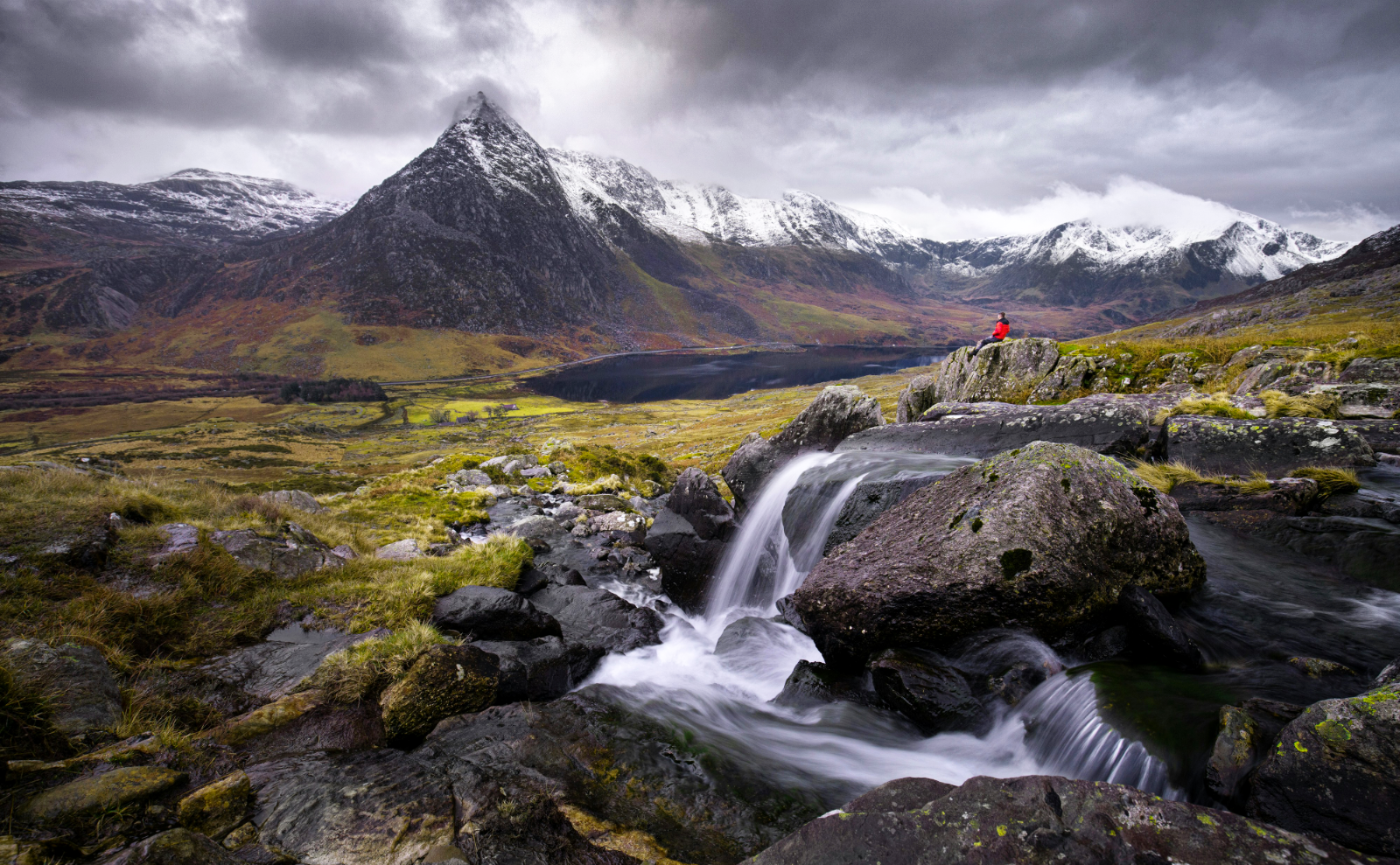
Top image courtesy of Neil Mark Thomas/Unsplash.