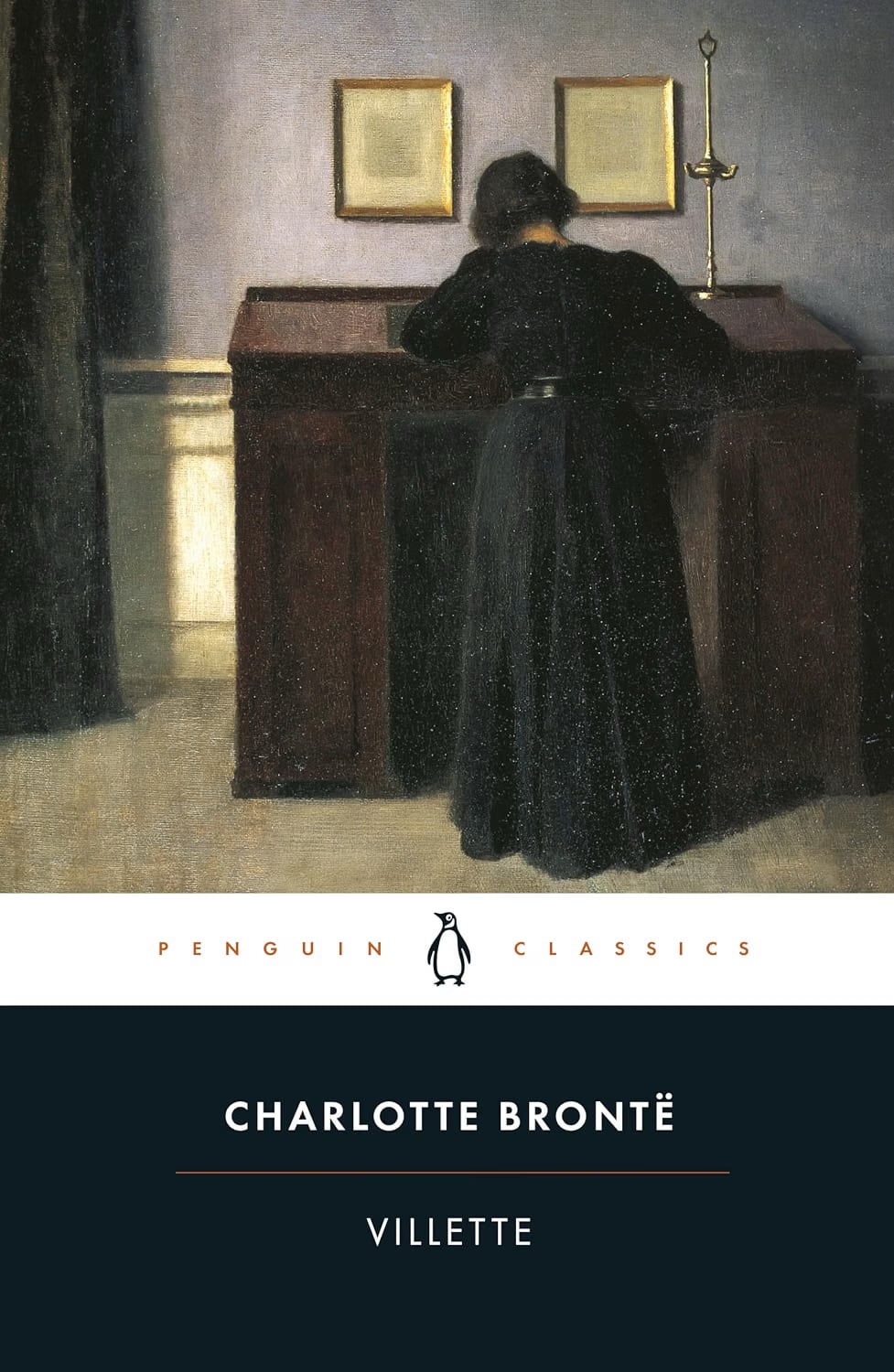
Villette
Charlotte Brontë
This was Charlotte Brontë’s final novel, and for some literary critics, it was her best.
The story is pretty straight-forward: an orphaned girl with zero prospects pulls herself up — time and time again — to be a teacher at Madame Beck’s, a girls’ school in a fictional Belgian city called Villette. But don’t be fooled: This is a challenging and weird book. If you’re a Jane Eyre fan, prepare yourself for something completely different.
In real life, Charlotte Brontë attended and taught at a school much like Madame Beck’s. In the 1840s, Charlotte and her sister Emily were students at the Pensionnat Heger, run by the Madame and Monsieur of the same name. This is the eldest Brontë’s most autobiographical novel; when Villette was published, it caused a brief, minor scandal in Brussels because the locals recognized the thinly veiled goings-on at the school.
This story incorporates some of the great Brontë tropes: an orphan, letters of significant import, hauntings that may or may not be ghosts, unrequited love, a frivolous female, an un-handsome but compelling hero, a salt-of-the-earth motherly type, her villainous opposite, and a house with secrets.
Our heroine Lucy Snowe could not be more unlike Jane, despite their surface similarities. She’s a slippery narrator, and though you will probably find yourself rooting for her, you may not like her very much. Many of the other characters’ motives remain murky, as well, but one young lady — Ginevra Fanshawe — is transparent as chiffon, and she is a hoot.
There’s plenty of plot to chew on as it travels from one set piece to another — childhood memories, a school play, the headmistress’ birthday party, a perilous school holiday. The story is gleefully stacked with Gothic elements: An old lady recalls the doomed love affair of her youth during a wailing storm. Disembodied cries shatter the night, women swoon with fever, the legend of a ghostly nun haunts the school.
As Brontë keeps the action moving, she also tackles the issues of the time: Feeling vs. Reason, Catholicism vs. Protestantism, the infantilization of women to keep them in line, and the limited roles of unmarried (and, therefore, unworthy) women.
But this novel isn’t preachy — it’s actually a bit gossipy. Lucy’s story gives us an intimate peek inside the classrooms of the school: the petty squabbles, the challenges of dealing with the headmistress, the privilege of the students, secret love letters and assignations, and… Oh, goodness! Is that a ghost?!
There’s an unsettling dreamy quality to the narrative and archetypical gothic elements that crash into an ambiguous ending you’ll be thinking about for a long time.
Here was a great house, full of healthy, lively girls, all well-dressed and many of them handsome, gaining knowledge by a marvellously easy method, without painful exertion or useless waste of spirits; not, perhaps, making very rapid progress in anything; taking it easy, but still always employed, and never oppressed. Here was a corps of teachers and masters, more stringently tasked, as all the real head-labour was to be done by them, in order to save the pupils, yet having their duties so arranged that they relieved each other in quick succession whenever the work was severe: here, in short, was a foreign school; of which the life, movement, and variety made it a complete and most charming contrast to many English institutions of the same kind.
— Charlotte Brontë